If you’re evaluating a hydrogen sulfide removal system for a midstream, upstream, or industrial application, you’ve likely run into two dominant technology categories: dry scavengers and liquid scavengers. Both remove hydrogen sulfide. Beyond that, they operate on fundamentally different principles, carry different cost structures, and fit different operational profiles.
Here’s a side-by-side breakdown to help you choose the right H2S scavenger for your specific conditions.
How Each Hydrogen Sulfide Removal System Works
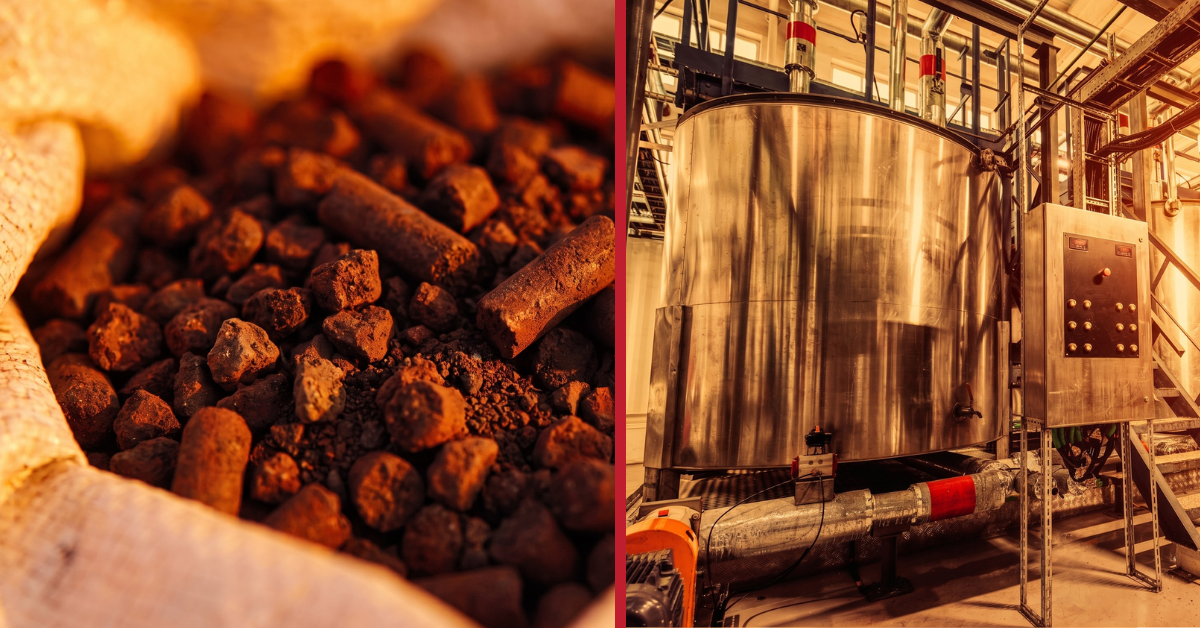
Dry scavenger systems pass sour gas through a fixed bed of solid iron-based media, typically iron oxide or iron hydroxide in granular form. The H2S reacts chemically with the media and is locked into a stable, solid byproduct (iron sulfide). No liquid handling is required. This is the same basic mechanism behind the “iron sponge” process that’s been used in gas treating for decades; see ScienceDirect’s overview of the iron sponge process for the underlying chemistry, and our own breakdown of how an H2S scavenger works for more detail on bed design and contact time.
Liquid scavenger systems inject a chemical solution, most often triazine-based, directly into the gas stream. The H2S is absorbed into the liquid phase, which must then be separated, collected, and disposed of downstream. The reaction mechanism for triazine scavenging has been studied in peer-reviewed research; see this ACS Omega study on triazine H2S-scavenging mechanisms if you want the chemistry in more depth.
Capital Cost
Dry systems require a vessel or contact tower and the media itself. The upfront cost is relatively straightforward. For modular or skid-mounted configurations, the capital footprint is predictable.
Liquid systems typically require injection pumps, chemical storage tanks, a separator or knockout vessel, and in many cases a recirculation or recovery loop. For high-volume or continuous applications, the capital scope expands considerably.
Advantage: Dry
Operating Cost
This is where the comparison gets more nuanced. Dry media has a finite absorption capacity and must be replaced once spent, though regenerable iron oxide media can extend service life if site conditions allow for it.
Liquid scavengers require continuous chemical replenishment. Consumption rates scale directly with H2S loading, which can make operating costs volatile on high-concentration streams. Chemical costs also vary significantly by supplier and contract structure.
For low-to-moderate H2S concentrations, dry systems often carry a lower total operating cost. At very high H2S volumes or flow rates, liquid injection systems may offer a better cost-per-unit removal, though you should verify this against your own flow conditions and current chemical pricing before drawing conclusions. This is a directional generalization, not a fixed rule for every site.
Advantage: Depends on application and H2S loading
Maintenance
Dry systems are relatively low-maintenance during operation. The main maintenance event is media changeout, which is periodic and planned; see our spring turnaround and vessel changeout guide for how to plan around it.
Liquid systems involve more moving parts: pumps, injection points, and separators all require monitoring and servicing. Chemical carryover and fouling are ongoing concerns. Operators running liquid systems typically report higher day-to-day maintenance demands, though the degree varies by system design and how well the injection is tuned.
Advantage: Dry
Disposal
This is a critical factor, and one where the details matter more than the headline.
Spent liquid scavenger byproducts, particularly triazine-based waste, are frequently managed as hazardous or special waste, but the actual classification depends on your jurisdiction and the composition of the waste stream, not a single universal rule. Oil and gas exploration and production waste carries a long-standing federal exemption from RCRA Subtitle C hazardous waste rules (see EPA’s page on managing oil and gas E&P waste), so most of these streams are regulated at the state level instead. In Texas, for example, that means Railroad Commission oilfield waste rules, and requirements can differ meaningfully by state. Check with your state regulator and waste hauler before budgeting disposal as a flat “hazardous waste” line item. We cover the Texas-specific side of this in our compliance guide for Texas H2S operators.
Dry media byproducts vary by formulation. Iron oxide-based media that produces nonhazardous spent material can meaningfully reduce disposal cost and regulatory burden. That said, this isn’t unconditional either: if the gas stream contains heavy metals, chlorides, or other regulated contaminants, spent dry media can pick those up and may require different handling regardless of the base media’s classification. Confirm disposal classification against your actual stream chemistry, not just the media’s baseline spec sheet.
Disposal costs for both waste types have generally trended upward in recent years across the industrial waste sector, though exact figures vary widely by region, hauler, and waste classification. Get a current quote for your specific location rather than relying on published national averages.
Advantage: Dry, when spent media qualifies as nonhazardous for your specific stream. Verify jurisdiction and contaminant profile before assuming this applies to your site.
Best-Fit Applications
| Scenario | Better Fit |
| Low-to-moderate H2S concentrations | Dry |
| Remote or unmanned locations | Dry |
| Pipelines, wellheads, gathering systems | Dry |
| Plugging and abandonment operations | Dry |
| Very high H2S volumes, large throughput | Liquid may be preferable |
| Applications requiring continuous adjustment | Liquid |
| High-flow sour gas processing at scale | Liquid |
This is a general framework, not a substitute for engineering review. Individual site conditions, including flow rate, H2S ppm, temperature, pressure, and moisture content, all affect which hydrogen sulfide removal system performs better. Engage an engineer before finalizing your approach.
Where Dry Media Stands Out
Not all dry scavenger media is the same. The formulation, particle size, and sourcing of the iron oxide media affect contact efficiency, bed life, and disposal classification.
Ole Red iron oxide media is manufactured in the United States and the company holds domestic iron mine ownership as part of its supply chain, though like the rest of this industry it also relies on some imported raw materials; see our own breakdown of who actually manufactures H2S scavenger media in the US for how that distinction works across the industry. The granular 4-10 mesh format is engineered for consistent gas contact and resistance to channeling. Spent media is classified as nonhazardous under typical conditions (see the disposal caveats above regarding contaminated streams). Pricing reflects direct factory sourcing, and product ships in bulk bags to simplify handling and reduce per-unit cost.
For operators evaluating dry scavenger options, those factors are worth putting directly into your cost model, alongside your own site’s stream chemistry and disposal jurisdiction.
Bottom Line
Liquid scavengers have a place, particularly at high volume and where continuous chemical dosing is operationally feasible. For most midstream and upstream applications where H2S concentrations are moderate, locations are remote or unmanned, and disposal costs matter, dry iron oxide media is generally the more practical and cost-effective choice, provided the disposal and jurisdiction questions above are confirmed for your specific site.
The right hydrogen sulfide removal system is the one that fits your actual operating conditions and regulatory environment, not the one with the lowest purchase price or the most familiar brand name.
The information provided in this blog post is for general informational purposes only and does not constitute legal, financial, operational, safety, or professional advice of any kind. Some content on this site may be created or assisted by artificial intelligence tools; while we review this content for quality, AI-generated information can contain errors, outdated information, or inaccuracies, and should not be relied upon as a sole source of truth. While we aim for accuracy, we make no guarantees about the completeness, reliability, or timeliness of the information presented, and it may not reflect the most current developments or apply to your specific situation. Before acting on any information found here, you should consult a qualified professional. Ole Red assumes no liability for actions taken based on the content of this post.